In this project, I explore the lullaby not only as a genre of oral folk art, but primarily as an act of preserving identity under conditions of linguistic and cultural isolation.
The language of the lullaby is the first intimate experience of belonging, passed down in the family even before a child learns to speak. Through the song, a mother transmits not just melody or lyrics — she passes on her language, memory, and sense of belonging. Cultural codes of her ancestors and family memory are passed down through household songs, phrases, and habits.
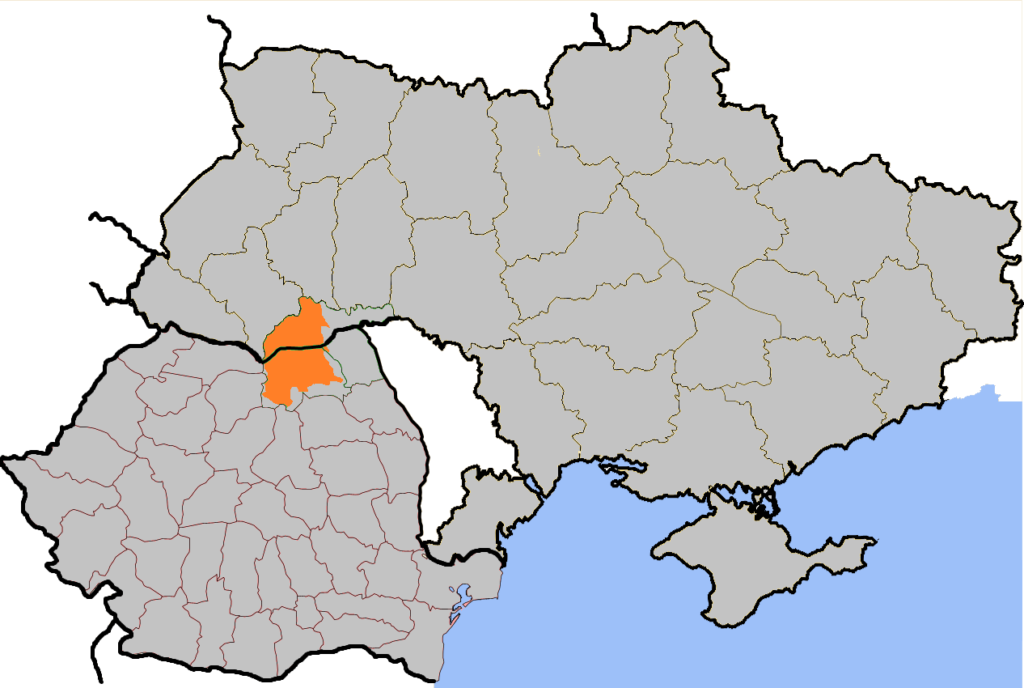
Bukovina is a historical-geographic region on the Ukrainian-Romanian borderland, which has for centuries been influenced by various empires and national policies: Austria, Russia, Romania, the USSR. This complex colonial and postcolonial history has shaped a unique multilingual and multicultural reality. In the 20th century, following the Ribbentrop–Molotov Pact (1939), the situation dramatically changed:
Many Romanian families from Northern Bukovina (now Ukraine) were deported to Siberia or terrorized in an effort to strip them of their identity and cultural belonging;
In Southern Bukovina (now Romania), Ukrainian families remained completely isolated from their own culture due to the impossibility of cross-border contact.
With the formation of the European Union, the preservation of identity has become one of its core values. This project will contribute to highlighting and restoring lost identities.
Despite these traumatic events, memory and identity have been preserved through family practices — among which lullabies played a key role. Even in exile or during forced assimilation, mothers continued to sing in their native language, creating a space of belonging — aloud, gently, intimately. Even in russian-speaking families, lullabies were sung in the ancestral language.
Women, often without realizing it, have rightfully held the role of cultural guardians. This ability to pass on culture to children through lullabies, stories, and poetry — and thus preserve it — becomes especially important in the context of thousands of refugees living far from home.
I regard lullabies as a source of oral memory, a form of micro-resistance, and a vehicle for transmitting identity under colonial pressure.
Within the project, I will conduct expeditions to two parts of Bukovina:
Southern Bukovina (Romania): recording lullabies from ethnic Ukrainian families.
According to the official census of Romania in 2021, 45,835 people identified themselves as Ukrainians (0.24% of the total population)
Northern Bukovina (Ukraine): recording lullabies from ethnic Romanian families.
According to the 2001 census of Ukraine, ≈151,000 ethnic Romanians lived within the Chernivtsi region (≈12.5% of the region’s population)
In October, after the harvest season, we plan a 10-day expedition to both Southern and Northern Bukovina. I worked with audio and video documentation, and conduct interviews with women (10 in Romania and 10 in Ukraine) who remember or still sing lullabies in their native language — possibly including folktales told by older family members. The focus was on personal stories, songs, intonations, language passed between generations, the tenderness of motherhood, and the maternal voice as a life talisman. The aim was to document the preservation of culture and identity under conditions of full or partial isolation. The voice of the mother is an unofficial historiography that is not recorded by archives, but forms a culture of belonging. Project realisate by Evghenia Gritsku
With the support of the Goethe-Institut as part of the (Dis)solutions project